Your bag is empty
Cannabis Edibles: What You Need to Know
Many cannabis patients use edibles as their preferred form of consumption. Edibles can be very discreet, do not require additional hardware, and offer a longer duration of effects compared to inhalation. And you’re not limited to simple cubes — oil type, formulation, and form factor within the edible category provide a variety of options for patients looking to curate their experience. Here’s the 411 on how edibles work, the options available, and a guide to choosing what will serve you on your journey to wellness. Plus, download our printable experience log to keep track of your experiences so you can find products that work best for you.
How Edibles Work With Your Body
The effects of edibles, whether they contain THC, CBD, or other cannabinoids, will usually start to work about 45 to 90 minutes after consumption.
This onset period is longer than inhaled methods because the THC isn’t able to absorb directly into your bloodstream as it is when inhaled. Instead, when you orally consume lipophilic cannabinoids like delta-9-tetrahydrocannabinol (Δ9-THC) the molecule must travel through the digestive system to the liver where it is metabolized into the water-soluble 11-hydroxy-tetrahydrocannabinol and can enter the bloodstream.
The resultant 11-hydroxy-THC is a more potent compound, making edibles feel more psychoactive and last longer than similar amounts of THC from other form factors. Most people will feel peak effects at around 3 hours, and total duration may stretch to 6 or more hours.
The amount of time it takes for edibles to kick in and the duration of effects is also impacted by:
- Body fat percentage
- Age and sex
- Metabolism rate
- Physical activity
- THC concentration or dose in the edible
- Frequency of consumption
- Stomach contents (if your stomach is empty OR if you consume alongside high-fat foods cannabinoids may take effect more quickly)
High concentrations or large doses of cannabis will prolong the edible’s duration in your system. On the other hand, those with higher metabolism rates will remove THC sooner from their systems. THC and other cannabinoids are lipophilic, which means that they bind to fats. Therefore, those with higher body fat percentages will remove THC from their systems at a slower rate. Lastly, those with less tolerance to cannabis will tend to feel the effects sooner than those who consume it regularly.
Once THC, CBD, or other cannabinoids have been absorbed into your bloodstream, they interact with your Endocannabinoid System (ECS) to produce therapeutic effects. Your Endocannabinoid System is a complex network which manages processes including pain, sleep, appetite, memory, immune response, and mood using internally produced cannabinoids CB1 and CB2. For more on the Endocannabinoid System, click here.
Some people don’t feel effects from edibles. This can be caused by metabolism variance, high tolerance, or liver enzyme variations. If your liver processes THC too quickly you won’t be able to absorb the molecule before it’s broken down into other compounds. Likewise, if your liver enzymes are too inefficient they won’t successfully break down the THC and you won’t feel its effects. If you’ve tried edibles and haven’t felt the effects, nanoemulsified (nano) formulations may be for you. Read more about nano below.
Edibles in the State of Utah
Utah state regulations on medical cannabis lay out acceptable form factors. These include: gelatinous cubes (a.k.a. rectangular gummies), soft confections, tablets, capsules, tinctures, and liquid suspensions under 30mL. Unfortunately cookies, brownies, candies, and larger beverages are not legal in Utah.
TIP: Interested in trying a unique edible format? Browse our collection here.
Gummy
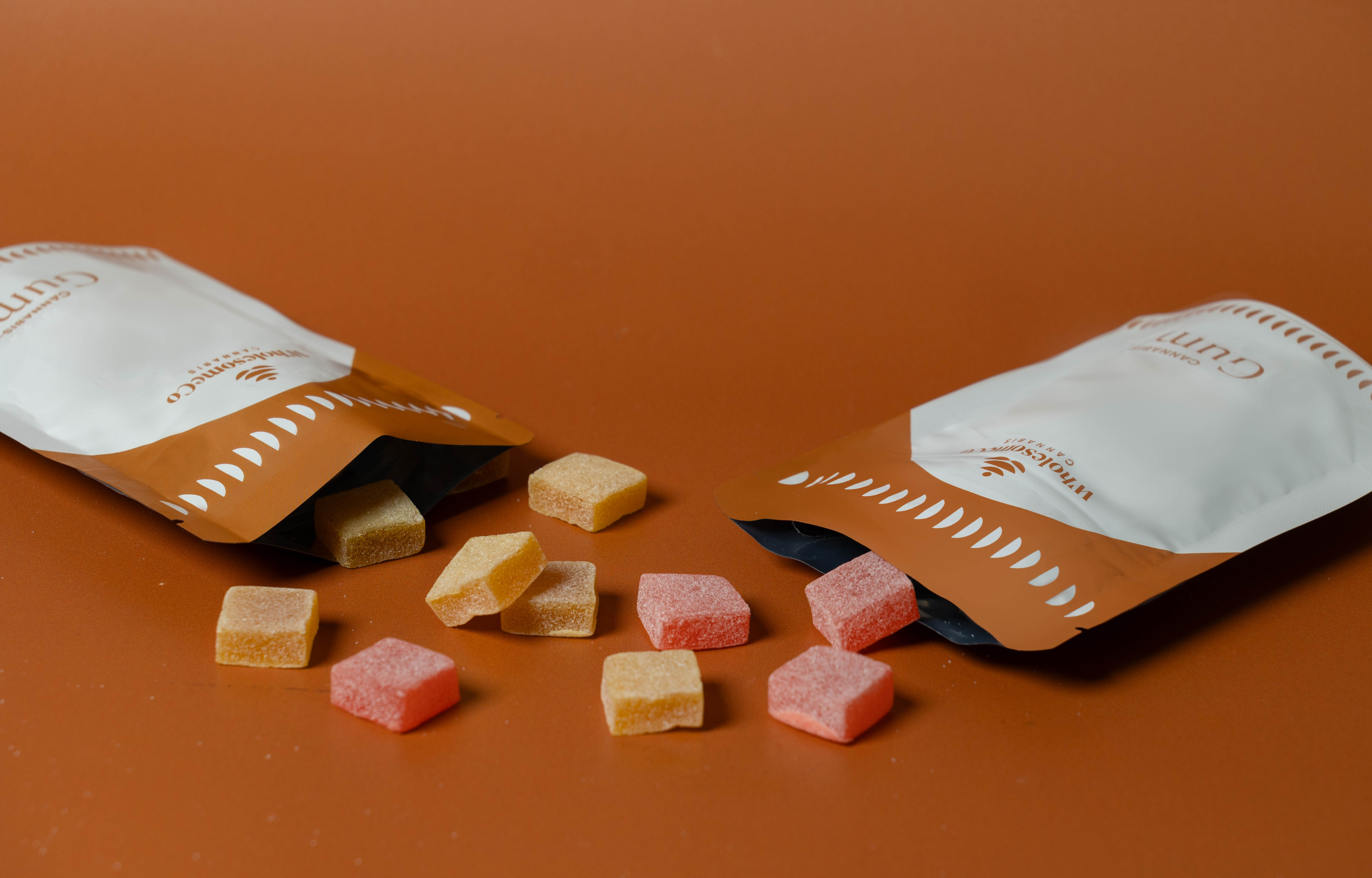
When you think of a cannabis edible, you probably think of a gummy first. At their simplest, gummies are infused with THC and a flavor, but there are many other kinds of gummies. The infused THC can range from distillate to full-spectrum, and additional ingredients can include other cannabinoids or terpenes to mimic specific strains, provide targeted effects, or enhance the Entourage Effect. Vegans should keep an eye on their gummy ingredients — most formulations use gelatin as a base which derived from animal products.
Nano
Nano-infused edibles typically take effect more quickly than traditional edibles. Some patients also feel stronger effects from nano edibles.
Nano, short for nanoemulsified, simply means that the THC has been processed into smaller molecules and made water-soluble. Smaller molecular size increases the surface area which means faster processing and water-solubility increases your water-based body’s ability to absorb the THC. Nano edibles are therefore more readily absorbed by the body through soft tissues instead of traveling all the way through the digestive system into the liver before reaching your bloodstream.
Bypassing the liver also means that if you’re somebody who has tried edibles before and you didn’t feel the effects, possibly due to a liver enzyme variation, nano edibles could work for you since they don’t rely on those enzymes to process the THC.
Tablet
Even more compact and discreet than gummies, tablets are often (though not always) mint-flavored for a breath freshening cannabis experience. This form factor is more temperature-stable, so no need to panic if you leave them in a hot car. Also, tablets tend to be easier to find in vegan formulations — Hilight’s Cannabis Mint Tablets are vegan, gluten free, and minty fresh.
Soft confection
A more recent addition to the state’s regulations, soft confections allow Utah cannabis to take the form of caramels. If you enjoy the effects of cannabis gummies but don’t like the gelatin texture or flavors available, soft confections could be for you. Also, the formulation’s higher fat content may enhance the effects of THC. Remember to start low and take it slow — no matter how delicious the caramel flavor may be.
RSO Capsule
Rick Simpson Oil (RSO) is a potent, full-spectrum cannabis extract. Capsules offer a convenient and pre-measured way to consume this potent concentrate, avoiding all contact with the sticky oil.
Tincture
Tinctures are another smokeless way to consume cannabis orally. In this modality the cannabis extract is suspended in a carrier oil, usually MCT oil, and additional cannabinoids are often added for targeted ratio formulations. Sublingual (under the tongue) dosing is recommended for tincture consumption; this method allows the infused carrier oil to absorb directly into your bloodstream via the soft tissues below your tongue, skipping the liver and delivering quicker onset than other edible formats. When swallowed, tinctures are digested and processed through the liver like any other edible, delaying onset to the typical 45-90 minutes.
Liquid Suspension
Similar to tinctures, but with a base material of water instead of oil, liquid suspensions provide a simple way to drink THC. Utah regulations restrict the size of these beverages to no more than 30mL, but some markets allow for full-sized beverages and patients can discreetly enjoy a seltzer infused with cannabis.
Edible Formulations
Oil Type
Edibles can be formulated using any kind of oil extracted from cannabis plant material. This means that the formulation of a cannabis edible can range from THC-only distillate to a full-spectrum oil like live rosin. Full-spectrum edibles provide a more holistic cannabis experience, and many patients say that they feel the effects throughout more of their body.
To learn more about extraction methods, click here. To learn more about different kinds of extracted cannabis oils, also known as concentrates, click here.
Cannabinoid Ratio
Formulations with minor cannabinoids like CBD, CBG, and CBN can synergistically work alongside THC to provide specific targeted effects. Keeping track of the cannabinoids and their ratios in your favorite products can help you to choose between new products — download our experience log here. Learn more about cannabinoids and their effects here.
Terpene Profile
These compounds are largely responsible for differentiating cannabis flower strains, contributing to the Entourage Effect and the holistic experience of cannabis consumption. Some cannabis edibles are formulated with specific terpene profiles to mimic the experience of a given flower strain so that edibles users can enjoy their favorite strains in their preferred format. When logging your experiences of different cannabis strains and products, be sure to note the dominant terpenes for future reference.
Benefits & Considerations
Edibles are easy to use, discreet, and powerful. Because edibles typically provide a longer duration of effects, they’re a good option for patients looking to manage a condition throughout the night without needing to wake up for another dose. Patients often use edibles to manage the following common conditions:
- Pain and inflammation
- Insomnia
- Glaucoma
- Anxiety
- Epilepsy
- Nausea and vomiting
- Poor appetite
However, it’s important to be patient when consuming cannabis-infused edibles. Remember that everyone’s endocannabinoid system is unique, and your body may take longer to feel the effects than others. It is easy to overconsume when it comes to edibles because of the delayed onset and strong effects. Doing so may lead to unwanted side effects—if this happens to you, see our tips here for how to come down. Overconsumption of any cannabinoid product, but in particular THC edibles, may result in side effects including:
- Poor concentration
- Cottonmouth
- Anxiety
- Increased heart rate
- Muscle spasms
- Hallucinations
- Delirium
- Slurred speech
- Short-term memory loss
- Panic attacks
CBD-infused edibles may cause the following side effects:
- Low blood pressure
- GI disturbances
- Headaches
- Fatigue
If you have taken too much, you can do a few things to “bring down the high.” CBD is a natural antidote for THC. It will block the binding sites for THC on endocannabinoid receptors, and this will help to counter the effects of THC, especially the euphoric feeling which can cause panic and anxiety in some people. If you have felt adverse effects from THC products in the past, you may want to try a ratio with higher levels of CBD to temper the impact of THC.
As a side note, keep in mind that THC may last in the system for up to one week. The plasma half-life of THC is 24-32 hours, and it takes about five half-lives to eliminate the THC from your system. Even though the bodily effect wears off hours after consumption, you may still fail a drug test days later because the THC is still in your system until it has been completely eliminated.
Finally, remember that edibles are perishable like any other food. Be mindful of the expiration date on your package and follow any storage instructions for best results. Don’t leave your product in a hot car or purse, as heat can melt edible products and make precise dosage difficult.
Choosing an Edible
If you live in the Beehive state and would like guidance in choosing the best product for your journey to wellness, our certified pharmacists are always here to help you. They are trained in both pharmaceutical medicine and cannabis research and will be able to advise you on drug interactions as well as recommend the best course of action for your unique health needs. Book a consultation by clicking here.
For patients who have never tried edibles before, we recommend starting with low doses (1-10mg per piece) and trying a variety of form factors to discover your preferred modality.
Vegan or gluten free patients may want to try a tablet or capsule. Similarly, tablets and capsules will be ideal for patients who need long lasting effects in a compact, discreet package.
Patients who like the effects of cannabis consumed orally but dislike the texture or flavor of a gelatinous gummy should try caramels or liquid suspensions. If those don’t suit your needs either, you may want to pick up a tincture and cook or bake it into your own edible goods.
If you’ve tried edibles before and found that the THC didn’t seem to take effect, you may want to try a nano-infused edible. Nano is also a good option for patients who prefer the oral consumption method but don’t like how long traditional edibles take to kick in.
You can view some of our unique edible offerings here or browse our wide selection of gummies here.
References
1. Bhaskar, A., Bell, A., Boivin, M. et al. Consensus recommendations on dosing and administration of medical cannabis to treat chronic pain: results of a modified Delphi process. J Cannabis Res 3, 22 (2021).2. Niesink, R. J., & van Laar, M. W. (2013). Does Cannabidiol Protect Against Adverse Psychological Effects of THC?. Frontiers in psychiatry, 4, 130.3. Chakravarti, B., Ravi, J., & Ganju, R. K. (2014). Cannabinoids as therapeutic agents in cancer: current status and future implications. Oncotarget, 5(15), 5852–5872.